Artificial Intelligence (AI) and robotics are revolutionizing the manufacturing industry, reshaping how products are designed, assembled, and delivered. By 2025, these technologies will redefine efficiency, lower production costs, and streamline complex industrial operations. Their growing presence promises massive potential but also introduces challenges that must be addressed with foresight and strategy. The shift to intelligent automation will not only change how factories function but also transform the global labor market.
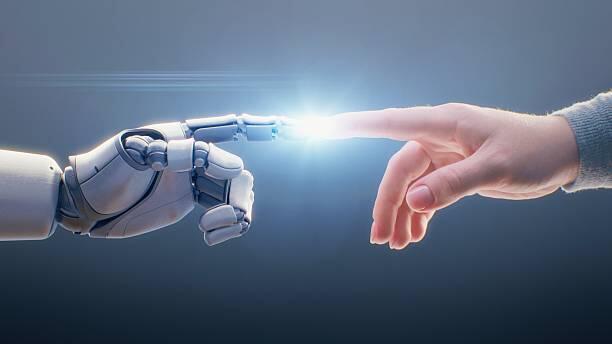
In this article, we explore the evolution of AI and robotics in manufacturing, their impact on labor, and what companies must do to prepare for this technological revolution.
How AI and Robotics Are Transforming Manufacturing
1. Smart Factories and Industry 4.0
Modern manufacturing is entering the era of smart factories, where AI systems, machine learning algorithms, and Internet of Things (IoT) devices work together to optimize every step of production. Often referred to as Industry 4.0, this approach enables real-time decision-making and predictive insights.
Examples: Real-time inventory tracking and predictive maintenance that identifies equipment failures before they occur.
Benefits: Reduced downtime, significant cost savings, and consistently higher product quality.
These intelligent systems turn data into actionable insights, allowing managers to adapt production based on demand, energy use, or supply chain conditions.
2. Collaborative Robots (Cobots)
Unlike traditional industrial robots confined to safety cages, collaborative robots, or cobots, are designed to safely work alongside humans. They can perform repetitive or physically demanding tasks while humans handle creative and complex work.
Applications: Assembly lines, packaging, quality inspection, and material transport.
Advantages: Cobots are cost-effective, flexible, and easy to integrate into existing workflows, making them ideal for small and medium-sized enterprises.
3. Predictive Analytics
AI systems analyze enormous amounts of data from sensors and machines to detect inefficiencies and anticipate failures. Predictive analytics ensures that potential issues are resolved before they disrupt production.
Example: Detecting a drop in machine performance that could signal an upcoming malfunction.
Impact: Increased operational efficiency, reduced repair costs, and optimized production schedules.
4. Advanced Quality Assurance
AI-powered vision systems use high-resolution cameras and sensors to identify defects invisible to the human eye. Automated quality checks minimize waste and guarantee product consistency.
Benefit: Improved quality control, reduced material waste, and enhanced customer satisfaction.
The Impact of AI and Robotics on Labor
1. Job Automation
Many repetitive and low-skilled tasks are now automated. Robots can weld, package, or move materials faster and more accurately than humans. However, this automation reduces the need for manual labor in some areas, reshaping the types of jobs available.
Implication: Routine positions decline, while demand grows for highly skilled technicians, data analysts, and engineers who can manage and maintain automated systems.
2. Creation of New Roles
AI and robotics are not just replacing jobs—they are creating entirely new ones. The growing need for experts in robotics engineering, data analysis, and AI system programming is redefining the industrial workforce. New hybrid professions are emerging at the intersection of mechanical engineering and software development.
3. Workforce Upskilling
To bridge the skill gap, industries are investing in large-scale training and certification programs. Workers are learning coding, AI model handling, data interpretation, and advanced robotics operations.
Focus Areas: AI programming, robotics operation, and data literacy.
This proactive approach ensures employees remain relevant in an AI-driven environment.
4. Changing Work Environments
Factories are evolving into smart, connected ecosystems. Workers can monitor production remotely via dashboards, augmented reality interfaces, or mobile devices. Collaboration between humans and robots promotes safety and precision, while AI tools assist in decision-making and planning.
Benefits of AI and Robotics in Manufacturing
1. Enhanced Productivity
Robots and AI systems can operate continuously, delivering consistent results without fatigue. This 24/7 productivity helps companies meet global demand faster and more efficiently.
2. Cost Efficiency
Automating complex processes reduces labor expenses and minimizes costly human errors. AI also helps companies save on maintenance, logistics, and energy consumption.
3. Customization and Flexibility
Modern consumers expect personalized products. AI enables manufacturers to customize designs, colors, or configurations without sacrificing efficiency, ushering in the age of mass personalization.
4. Sustainability
Through precise resource management and real-time optimization, AI helps manufacturers cut waste, lower emissions, and use energy more efficiently—contributing to greener, more sustainable operations.
Challenges of AI and Robotics Adoption
1. High Initial Investment
Integrating AI and robotics into existing production lines demands substantial upfront capital. Small businesses may struggle with these costs without financial support or government incentives.
2. Workforce Displacement
Automation inevitably leads to job shifts. While some workers move into higher-skilled roles, others may be displaced entirely. Governments and companies must provide reskilling programs and social safety nets to minimize the human cost of automation.
3. Ethical Concerns
AI-based decisions in production raise questions about accountability and transparency. Ensuring fairness and preventing bias in AI-driven systems will be crucial for ethical adoption.
4. Cybersecurity Risks
Connected factories depend heavily on digital infrastructure. This increases the risk of cyberattacks targeting production systems, data networks, and supply chains. Manufacturers must prioritize robust cybersecurity frameworks.
Key Trends in AI and Robotics by 2025
-
Autonomous Manufacturing:
Factories will become fully automated, where AI systems control the entire process—from design to packaging—without direct human intervention. -
Edge Computing in Robotics:
Processing data at the “edge” of networks enables real-time responses and reduces latency in robotic operations. -
AI-Powered Supply Chains:
Predictive algorithms will help manage logistics, anticipate demand fluctuations, and reduce delivery times. -
Green Robotics:
The next generation of robots will focus on energy efficiency, recyclable materials, and sustainability.
Preparing for the AI and Robotics Future
1. Invest in the Right Technologies
Companies should carefully assess their operational needs and choose AI and robotics solutions that align with their goals rather than following trends blindly.
2. Upskill Employees
Continuous learning should become part of corporate culture. Investing in education ensures that human talent evolves alongside machines.
3. Collaborate with Tech Providers
Partnerships with AI developers and robotics firms provide access to innovation, maintenance expertise, and scalable technologies.
4. Build Ethical and Legal Frameworks
Organizations must create internal policies that address transparency, fairness, and the social effects of automation.
Real-World Examples of AI and Robotics in Action
-
Tesla’s Gigafactories:
Tesla uses AI-driven robotics for electric vehicle and battery production. These fully automated systems reduce costs and maintain high precision. -
Amazon’s Fulfillment Centers:
Thousands of mobile robots move packages across massive warehouses, optimizing logistics and reducing human workload. -
Siemens’ Smart Factories:
Siemens integrates IoT and AI to analyze energy use, minimize waste, and ensure sustainability across its production facilities.
Opportunities for the Future
-
Global Competitiveness:
Nations that embrace AI and robotics early will lead in industrial innovation and technological leadership. -
Economic Growth:
Automation can increase GDP by improving productivity and creating new, high-value industries centered around technology. -
Safer Workplaces:
By handling dangerous tasks, robots significantly lower the risk of workplace accidents. -
Personalized Products:
AI enables manufacturers to tailor goods to individual needs, bridging the gap between mass production and personal design.
Conclusion
AI and robotics are not just tools—they represent a complete transformation of modern manufacturing. They redefine productivity, efficiency, and even the concept of human labor. While automation may replace some traditional jobs, it also creates new opportunities for innovation, creativity, and higher-value work.
To succeed in the coming decade, companies must balance automation with human empowerment—investing in both technology and people. By 2025, organizations that fully integrate AI and robotics into their strategy will lead the next industrial revolution, shaping a more efficient, sustainable, and intelligent future for manufacturing.